Color Analysis is the study of the harmony of colors. It is a multi-ethnical method that determines your season of belonging by analyzing your personal color palette manifested in your skin, eyes and hair. It consists of assigning you a palette that reflects a specific season with the same chromatic characteristics as the ones naturally present in your appearance. There are four macro seasons: summer, winter, spring and autumn. Each of them has four subgroups and specific chromatic characteristics.
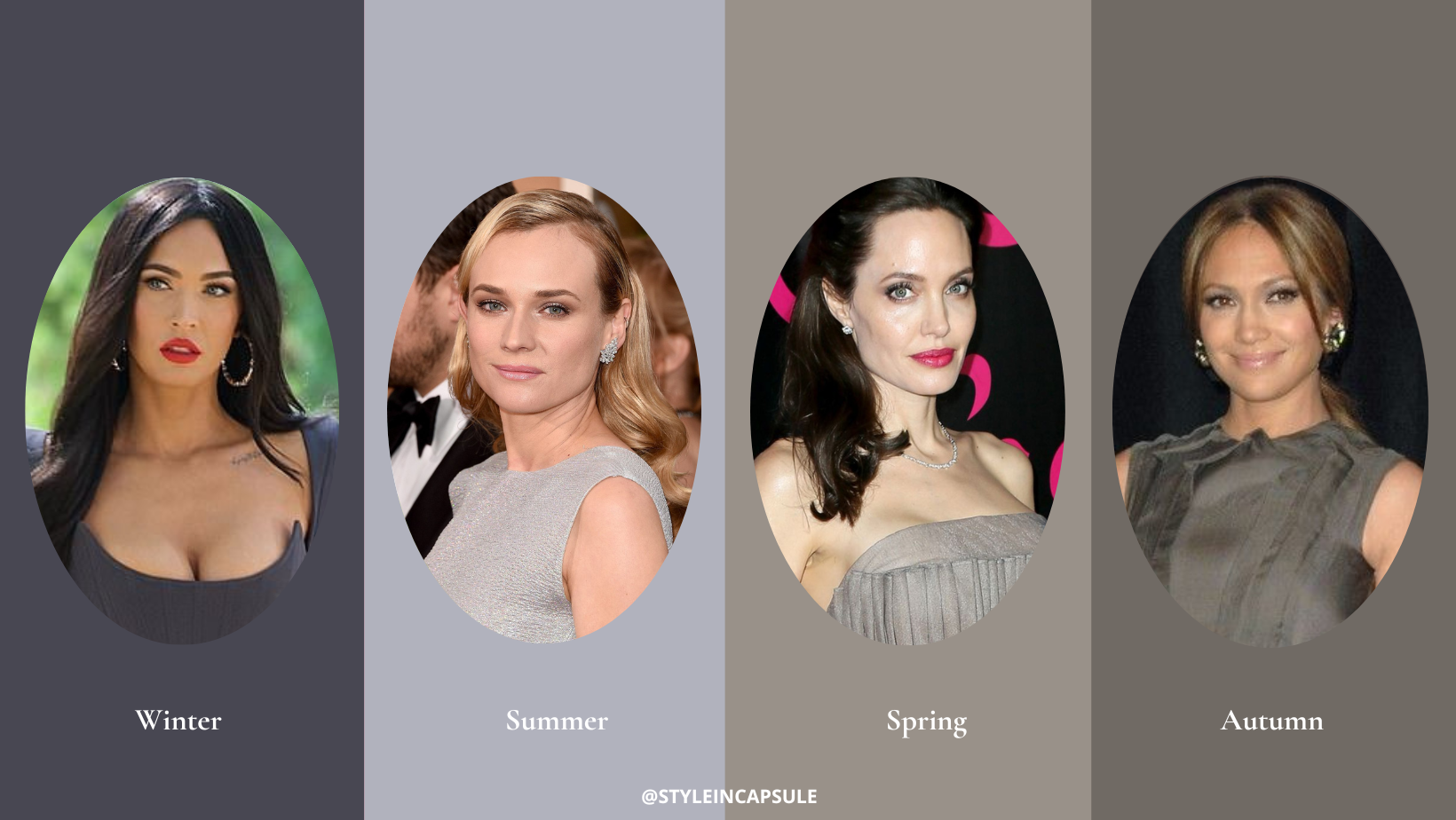
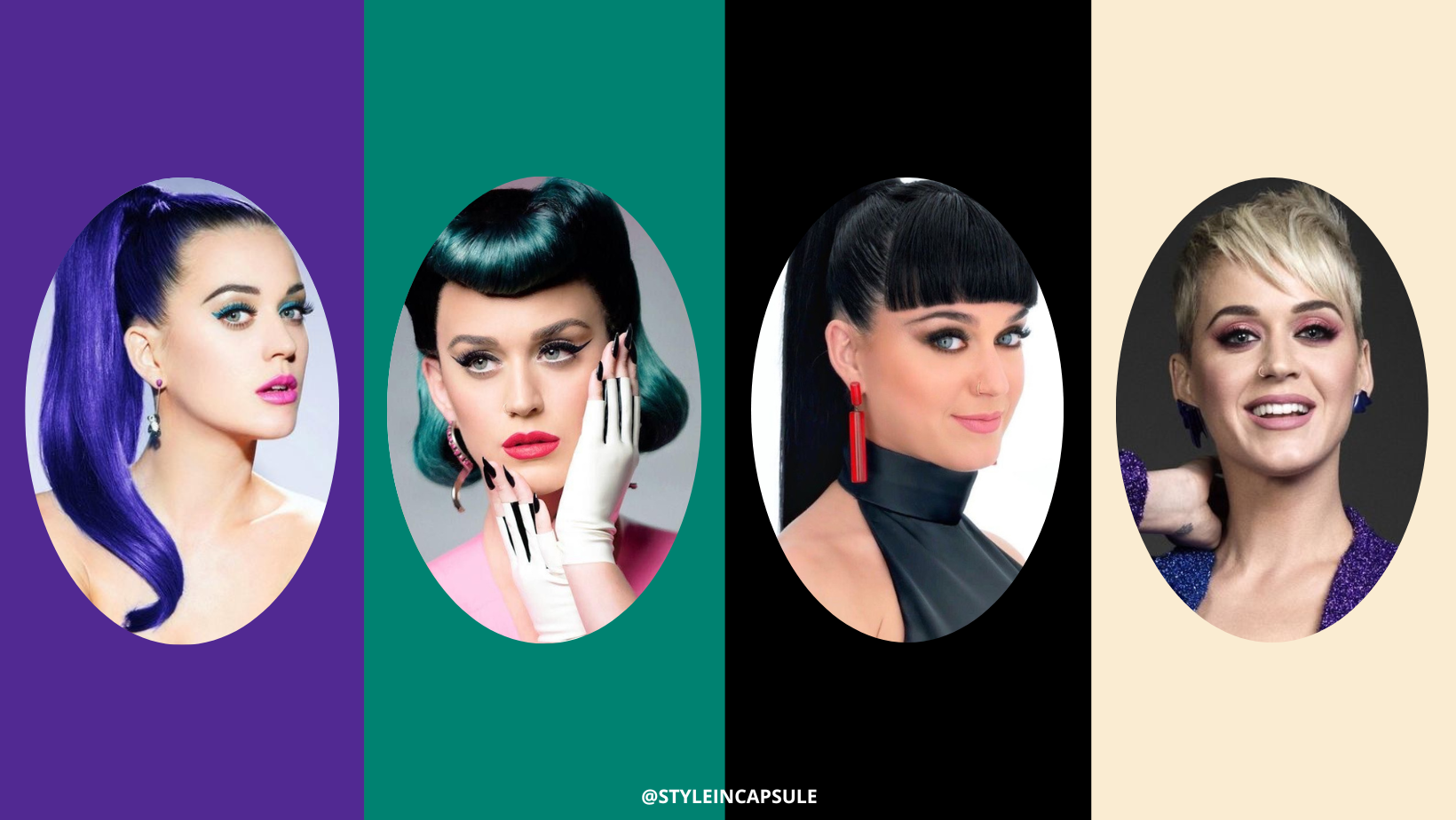
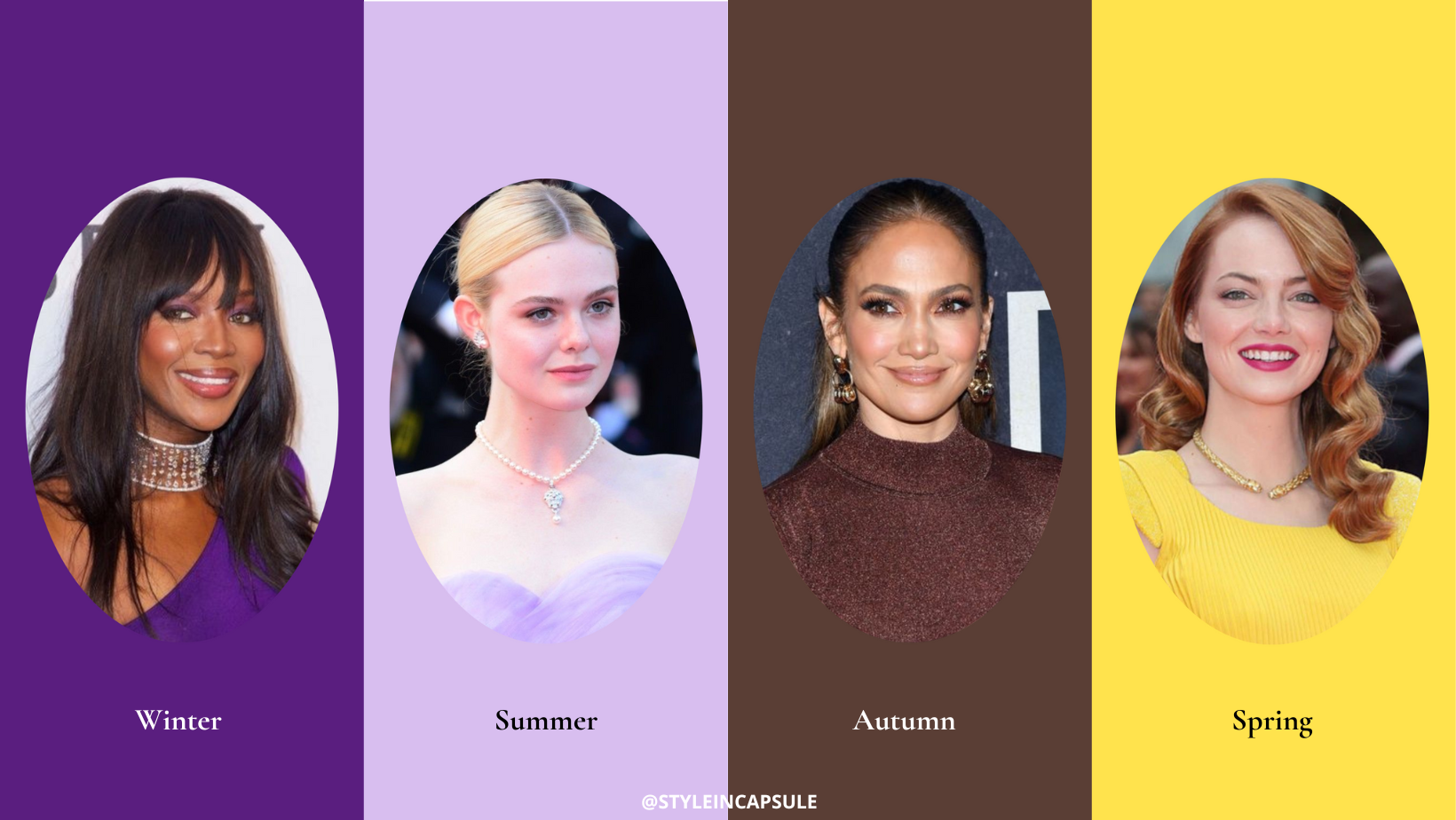
For a better understanding of the sixteen subgroups, I recommend looking at the stars of reference while you read the article and noticing all the colors in each of the pictures. Pay attention to the chromatic characteristics of each woman, the color of her outfit and the color of the frame which represents the perfect chromatic “environment” for her. Each color is carefully selected because it has the same chromatic characteristics as the woman that is wearing it, that’s why it is in complete harmony with her natural coloring. Let’s see all of the sixteen subgroups one by one.
WINTER SEASON

Pictures from Pinterest

The Winter season is dark, cool and bright, and it is divided into four subgroups depending on its dominant characteristic: “winter true”, “winter cool”, “winter deep” and “winter bright”.
The “winter true” palette woman is a “winter pure” person and presents all the characteristics of the winter season (value, intensity, contrast and undertone) in a homogeneous way in her personal color palette. She will be enhanced by all the colors from the winter season because she doesn’t have a dominant aspect in her coloring.
The “winter bright” palette woman has as a dominant aspect in her coloring the “brightness”. That means that the “brightest” colors will emphasize her complexion and dominant aspect the most.
The “winter deep” palette woman has the “depth” as a dominant aspect. The “deepest” colors from the winter palette will bring out her coloring the most.
The “winter cool” palette woman has the “coolness” as a dominant aspect, so the “coolest” colors from the winter palette (the ones that contain a higher amount of blue on their inside) are the best for her natural coloring.
The “winter cool”, the “winter bright” and the “winter deep” subgroups have different dominant aspects and mostly need colors that emphasize and support their dominant chromatic feature. The enemy colors for all winter subgroups are orange colors, warm brown and gold metal.
SPRING SEASON
Pictures from Pinterest

The spring season is warm, bright and light. The subgroups that are part of this season are the “spring true”, “spring warm”, “spring bright” and “spring light”.
The “spring true” palette woman represents the spring pure palette and the original spring season. All the colors from the spring palette will enhance her coloring because she doesn’t have a dominant aspect.
The “spring bright” palette woman is particularly bright because she has the “brightness” as a dominant aspect. The best colors that will support her dominant aspect are the “brightest” ones from the spring palette.
The “spring warm” palette woman has as a dominant aspect in her coloring the “warmth”, so the colors that will bring out her coloring the most are the warmest ones. (the colors that contain a higher amount of yellow on their inside).
The last subgroup, the “spring light” palette woman, has a “light” appearance. To “repeat her coloring and create color harmony, her best colors are the “lightest” ones from the spring palette.
Enemy colors for all the spring subgroups are black, gray in the cold version and silver metal.
AUTUMN SEASON
Pictures from Pinterest

The autumn season is warm, dark and soft. Inside this season, there are four subgroups: the “autumn true”, the “autumn warm”, the “autumn deep” and the “autumn soft”.
Again as in the previous seasons, we work by repetition. If a woman’s coloring is particularly soft (autumn soft), she will be exalted mainly by the “soft” colors from the autumn palette.
If a woman has dark value in her personal color palette (autumn deep), she will be enhanced the most by the “deepest” colors from the autumn palette.
The “autumn warm” palette woman has as a dominant aspect the “warmth”, so her best colors will be the warmest ones from the autumn palette.
The “autumn true” is a pure palette woman that doesn’t have a dominant aspect in her coloring and all the colors from the autumn palette will suit her well.
Enemy colors for all autumn subgroups are black, blue, gray in the cool version and silver metal.
SUMMER SEASON
Pictures from Pinterest

The summer season is cool, soft and light. In this season, there are four subgroups: the “summer true”, the “summer cool”, “the summer light” and the “summer soft”.
The “summer true” is a summer pure palette woman and all the summer colors flatter her coloring.
The “summer cool” palette woman is the one with the highest intensity in the summer season and she can handle more intense colors compared to the other subgroups. Her dominant aspect is the “coolness,” so to support her cool appearance she will need the “coldest” colors from the summer season.
The “summer light” palette woman has a particularly light appearance and her dominant aspect is the “lightness”; that’s why the “lightest” colors from the summer palette will highlight her delicate coloring.
The “summer soft” palette woman is enhanced by the softest colors of the summer season because her striking feature is the “softness” naturally present in her personal color palette manifested in her eyes, hair and skin.
Enemy colors for all summer subgroups are orange color, warm brown and gold metal. The gold metal is an exception only for the “Summer soft” subgroup. This subgroup is the only one among all subgroups that suits well both the silver and the gold metal (especially the antique gold) due to the autumn influence and its proximity on the seasonal chart.
CONCLUSION
It is not enough to know your original season of belonging. We all present specific chromatic characteristics and it is impossible to include all the people in just four seasons. As you can see, in each season, all the individuals have the same chromatic characteristics but are on different levels. For example, all the spring palette women are bright, but there are some cases in which the “brightness” is the striking feature of a woman’s coloring. That means that this feature is on a higher level in her coloring among all the variables, so it is her dominant aspect. This dominant aspect makes the person belong in the “spring bright” subgroup. And because of her dominant aspect she will be enhanced by different colors compared to the other subgroups of the spring season and has specific power colors that bring out her dominant aspect the most.
To best enhance your coloring, you need to know your subgroup, which represents the dominant aspect of your coloring. That way, you will know what are the colors that emphasize your specific chromatic characteristics.
Want to learn more about the color analysis and the sixteen subgroups? Follow us on Pinterest where you can find a board for each season with reference stars and with a collection of outfits “in palette”.